Navigation and sensor fusion
The demo shows range-sensor data being filtered into terrain and object clusters while the system estimates the vehicle path without a prior map.
Robotics & controls
Embedded systems
Elite Robotics
C++ and ROS autonomy software linked LiDAR, GPS and IMU data to localisation, route planning and vehicle control on an electric mower tested outdoors.
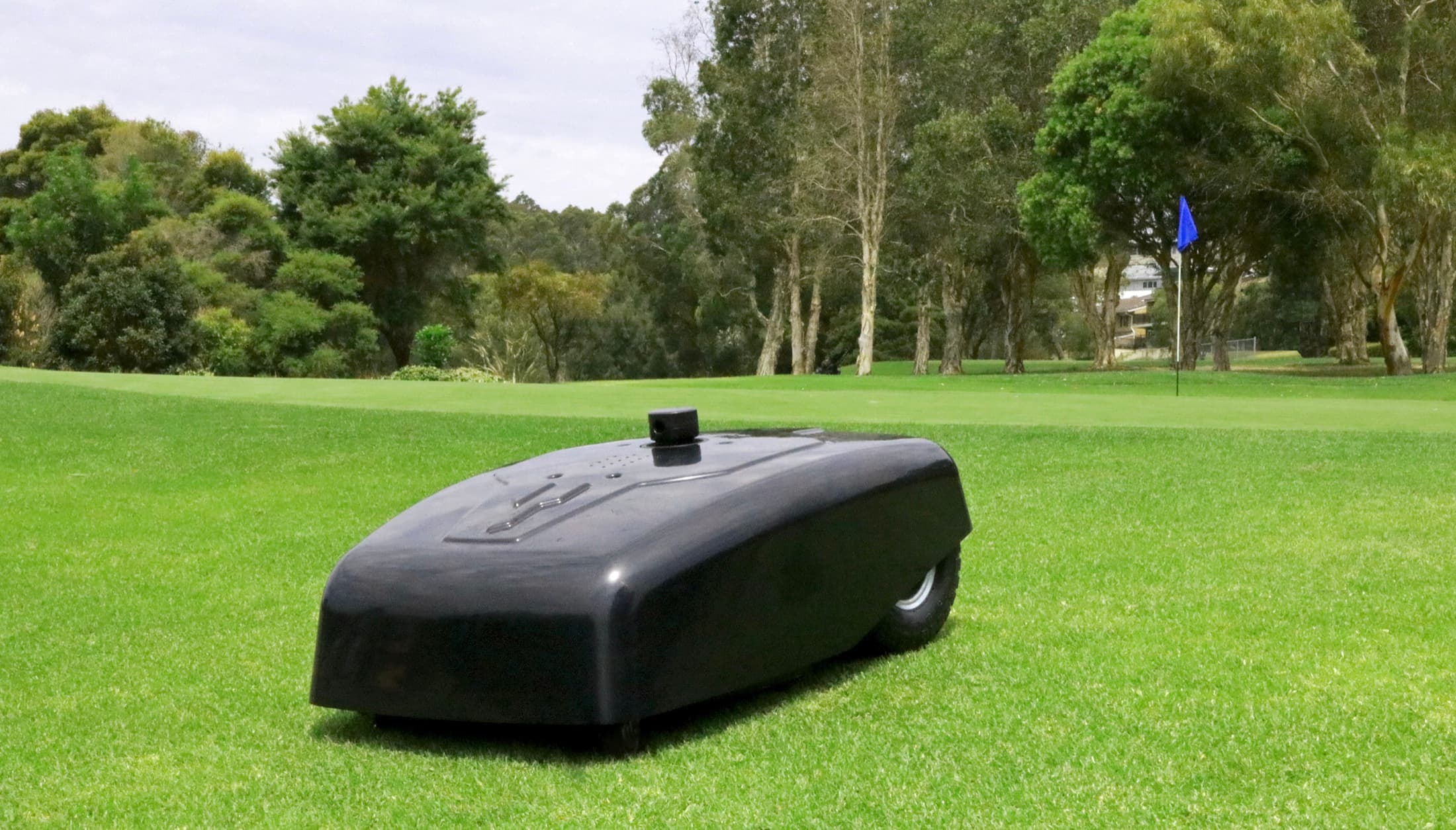
A working autonomous mower and a reusable foundation for other service vehicles.
Boundary wire and random coverage were not enough for the product Elite Robotics wanted to build. The mower needed to map outdoor terrain, detect obstacles, estimate its position and plan complete coverage using practical onboard hardware.
Outdoor testing exposed problems that bench tests could not. The team could see whether a failure came from sensing, planning or vehicle control and work on the right layer.
We separated the compute, sensor interfaces, localisation, planning and control software. That kept the mower practical while leaving the core software ready for other outdoor service vehicles.
The vehicle and drivetrain already existed. Elite Robotics built the sensing, compute, navigation and control layers around them.
Electric vehicle platform and drivetrain.
GPS, IMU and LiDAR data with aligned frames and timing.
Raspberry Pi and NVIDIA Jetson hardware interfaces.
C++ ROS nodes, message contracts and launch configuration.
Localisation, obstacle tracking and coverage planning.
Motion commands passed into the vehicle controls.
At Elite Robotics, Sahil worked as co-founder, CEO and embedded engineer. He led the product and commercial direction, designed the embedded architecture, selected the onboard compute and integrated the complete vehicle. The wider team built the probabilistic mapping and tracking algorithm. Sahil connected it to the sensors, hardware and controls used in field testing.
The demo shows range-sensor data being filtered into terrain and object clusters while the system estimates the vehicle path without a prior map.
The upgraded Elite Robotics mower runs the autonomy software while cutting grass outdoors.
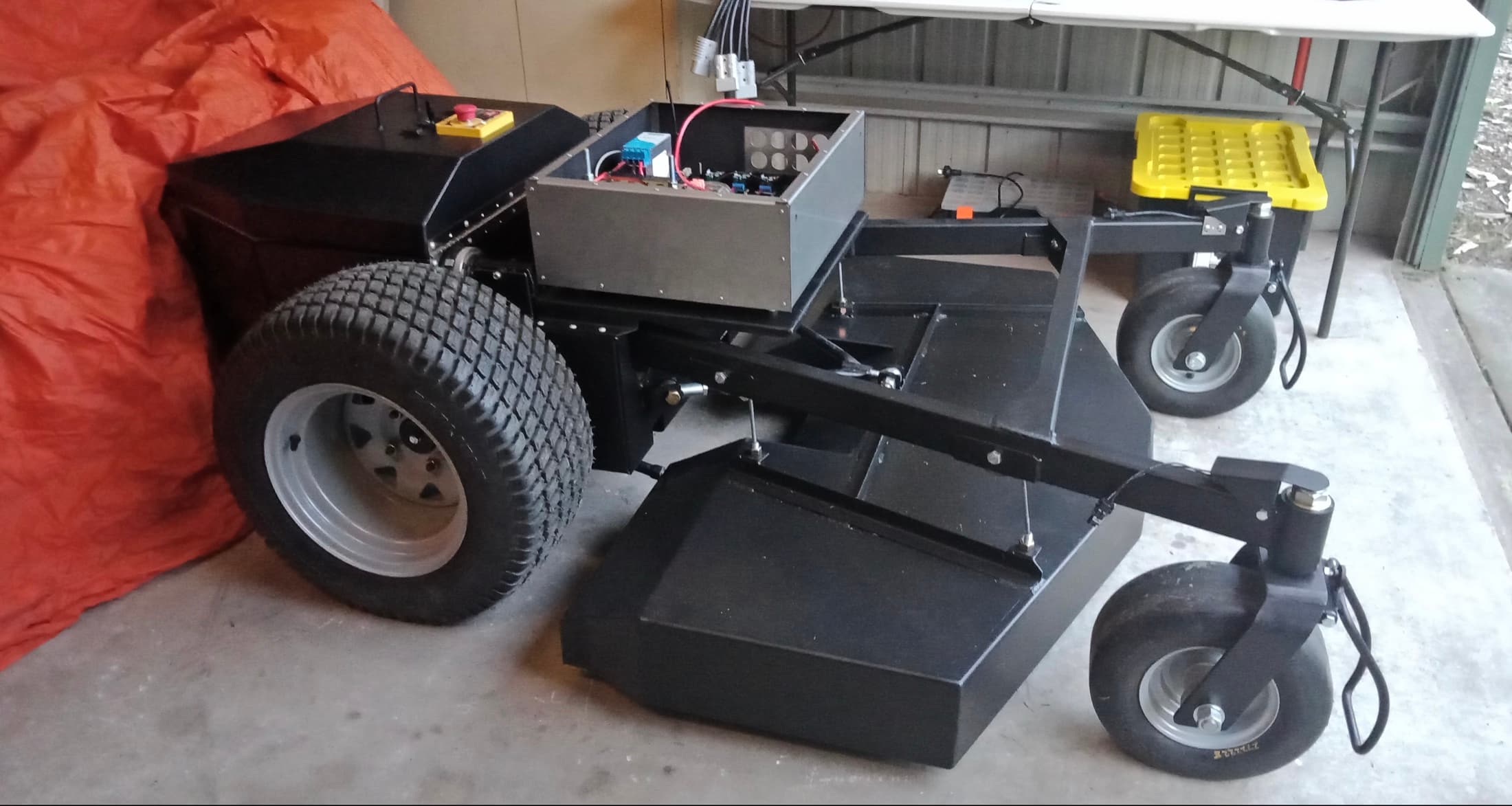
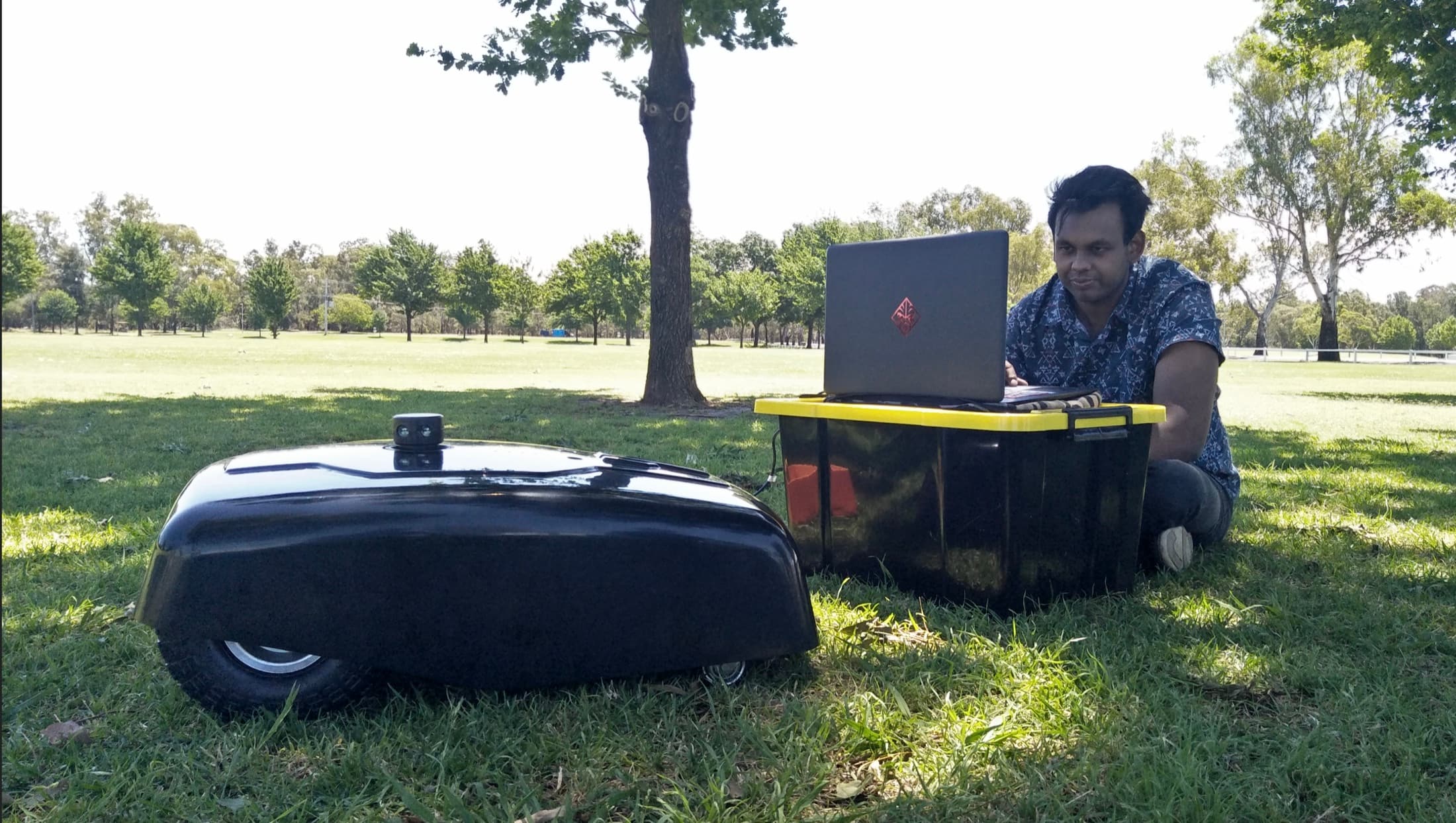

Outdoor field tests
The platform progressed from bench integration to an autonomous mower operating outdoors.
Complete autonomy stack
LiDAR, GPS and IMU inputs fed localisation, planning and vehicle control.
NSW MVP grant
Elite Robotics received an NSW Government Minimum Viable Product grant.
Slingshot Accelerator
The company completed the Slingshot Accelerator and received backing through its venture fund.
C++
ROS
Raspberry Pi
NVIDIA Jetson
GPS
IMU
LiDAR
Robotics software
Sensor integration
Motion planning
Embedded compute
Next project
2 months to 3 days