Software marketplace
RemixCode
A marketplace to buy, sell and customise software, with a full suite of tools for developers.
Buyers can see what is inside a piece of software and reach the people who can change it.
- Stage reached
- In development
- Period
- 2025 – present
- Sector
- Software marketplace
- Organisation
- RemixCode
My contribution
I built the platform. The design problem was joining purchase, source intelligence and developer hire onto one account and release model.
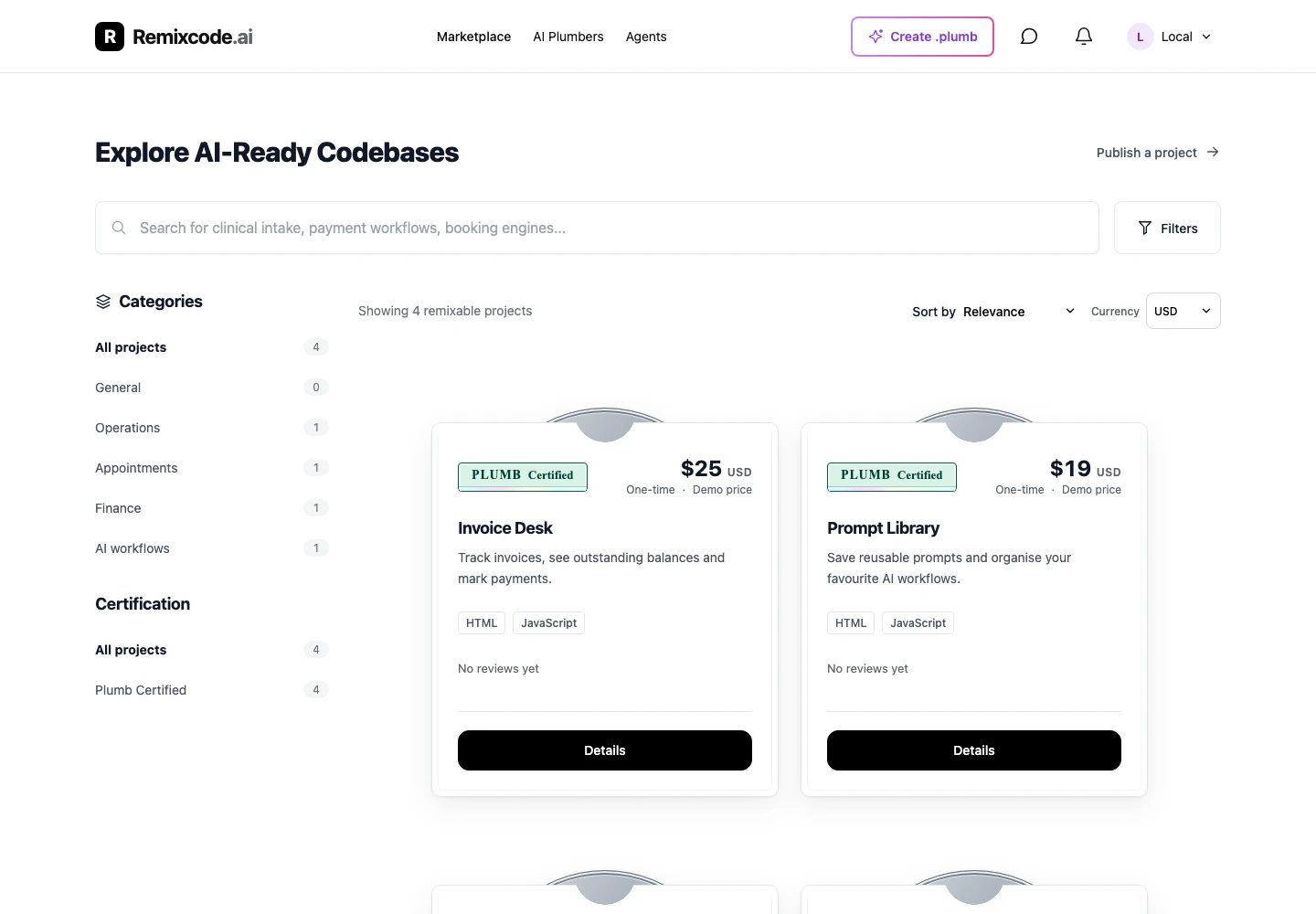
- Software listings, search and developer directories
- Private source releases, Plumb generation and agent access
- Publication reviews, sandbox checkout and version-bound downloads
The result
One platform connecting software discovery, developer tools and customisation enquiries.
Engagement
Marketplace and developer-platform engineering
The problem
Buying useful software, understanding what is actually inside it, and finding someone who can adapt it are three separate journeys through three separate systems. The buyer ends up owning a zip file and a guess. Joining those journeys means solving ownership, remix permission, payment and technical review together, without taking control away from the people who wrote the code.
How it was approached
- Join software discovery and developer tooling through shared accounts and versioned releases.
- Generate project context from the source itself, so the knowledge travels with the software.
- Tie publication, technical review and purchase entitlements to a specific release, not a product page.
- Never execute uploaded code and never call an AI provider during generation. Extraction only.
How far up the stack the work reached
Nothing existed before this. The platform, its data model, its commerce path and its moderation workflows were designed and built from a blank repository.
Source
ZIP uploads and public GitHub repositories supplied by creators.
Intake
Private object storage, durable job records and lease-based workers.
Context
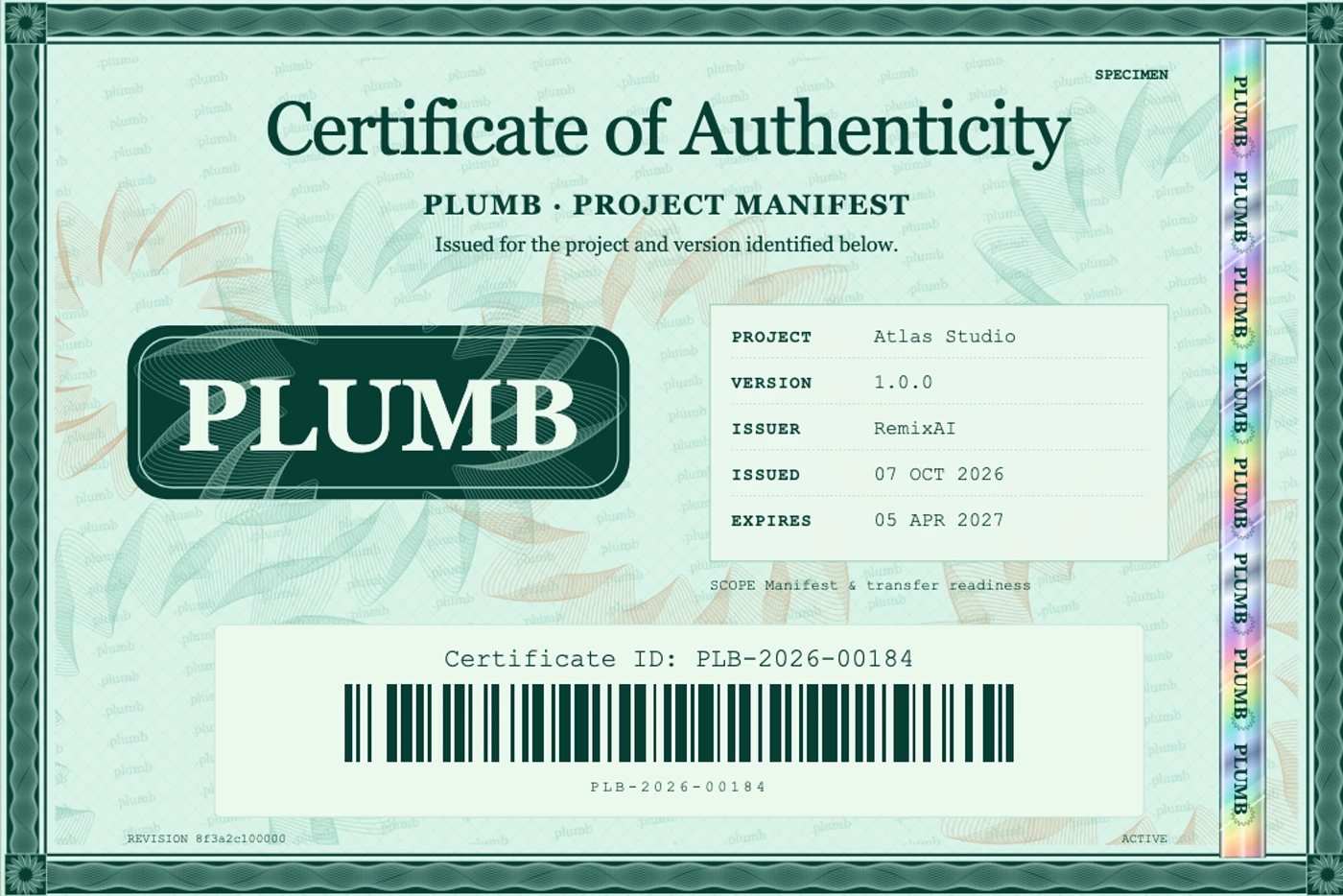
Bounded source extraction into a versioned .plumb manifest.
Market
Listings, publisher profiles, directories, reviews and moderation.
Commerce
Sandbox checkout, payouts, refunds and release-bound downloads.
Governance
Platform CMS, technical assessment and role-based administration.
Engineering load
Mechanical
Electrical
Embedded
Software
Operations
What was built
Developer suite
Private source releases, and the knowledge needed to work with them.
- Private project workspaces with versioned source
- ZIP and GitHub intake with lease-based worker generation
- Structured authoring, saved revisions and authenticated downloads
- Agent and CLI access through issued API keys
Software marketplace
Discovery, purchase and customisation enquiry in one place.
- Software search, product pages and publisher profiles
- Developer and agent directories with taxonomy-driven filtering
- Reviews, ratings and three moderation queues
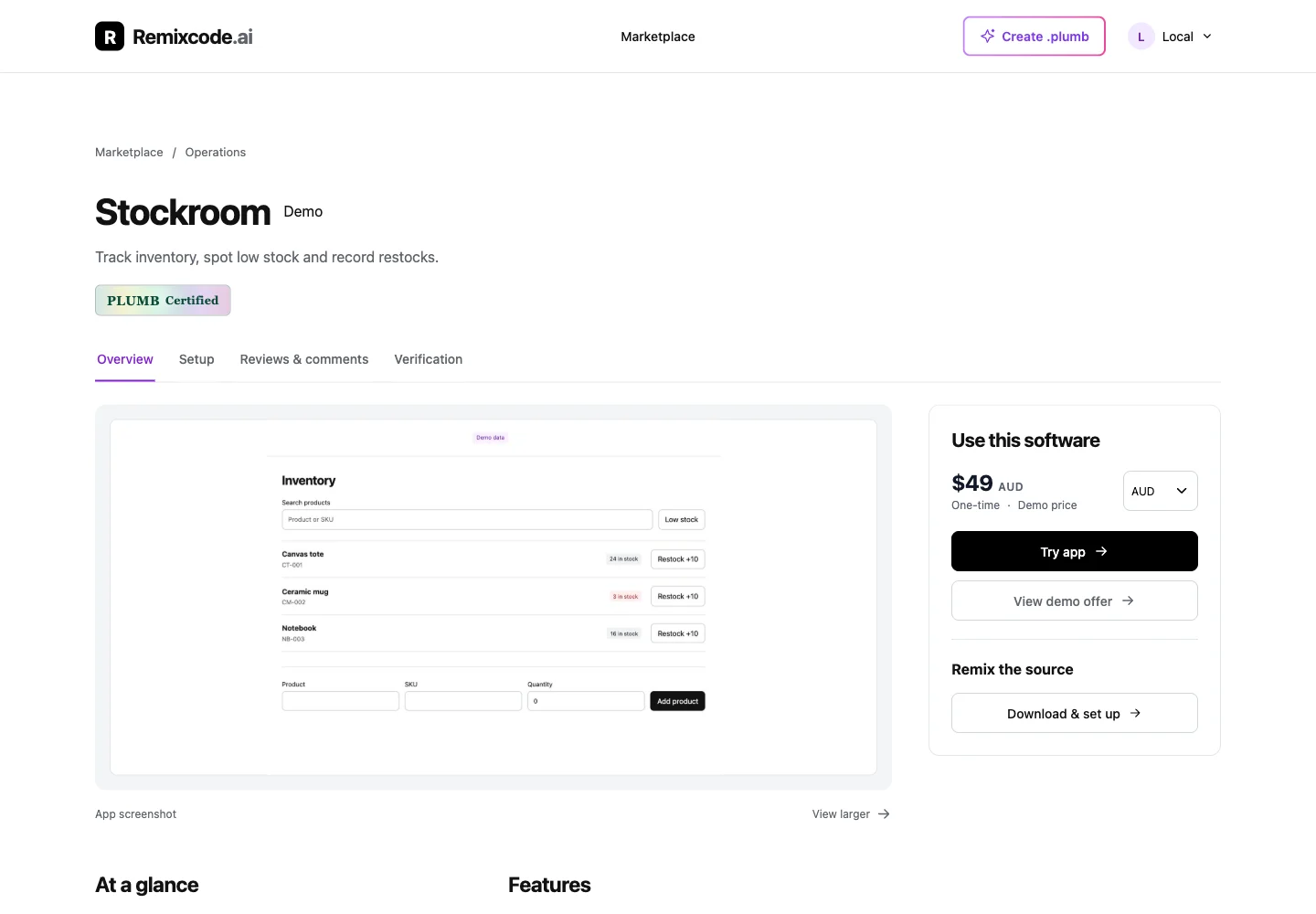
- Sandbox checkout, seller payouts, refunds and exact-version downloads
Review and operations
Releases and public content governed through one backend.
- Platform CMS and publication review
- Release-specific technical assessment workflows
- Creator-controlled remix enquiry routing
- Manual identity, location and skills review for listed developers
Measuring the premise
A benchmark harness, because the core claim needed evidence.
- Paired conditions comparing native discovery, written instructions and full manifests
- Frozen task packs, artefact hashes and recorded trajectories
- Capability gates kept separate from token, cost and latency efficiency
- Six tasks across four conditions producing 24 attempts and 192 evidence gates
What changed
One account
Four product surfaces
Listings, project workspaces, source intelligence and developer directories share the same identity and release model.
Version-bound
Purchase lifecycle
Sandbox runs exercised checkout, seller payouts, exact-version downloads and refund revocation end to end.
192 gates
Evidence per benchmark run
Six tasks across four context conditions produce 24 attempts and 192 executable evidence gates, so a claim can be checked rather than asserted.
No code executed
Generation safety boundary
The generator never runs uploaded code and never calls an AI provider; it extracts structure and records what it could not resolve.
Technical stack
TypeScript
Node.js
Neon
PostgreSQL
Stripe
SQLite
Playwright
Capabilities applied
Marketplace engineering
Developer tooling
Payments integration
Product architecture
From the project
Next project
Willbot
A broker gets a ranked lender answer with the policy rows it came from.