Construction software
AROBOTIX
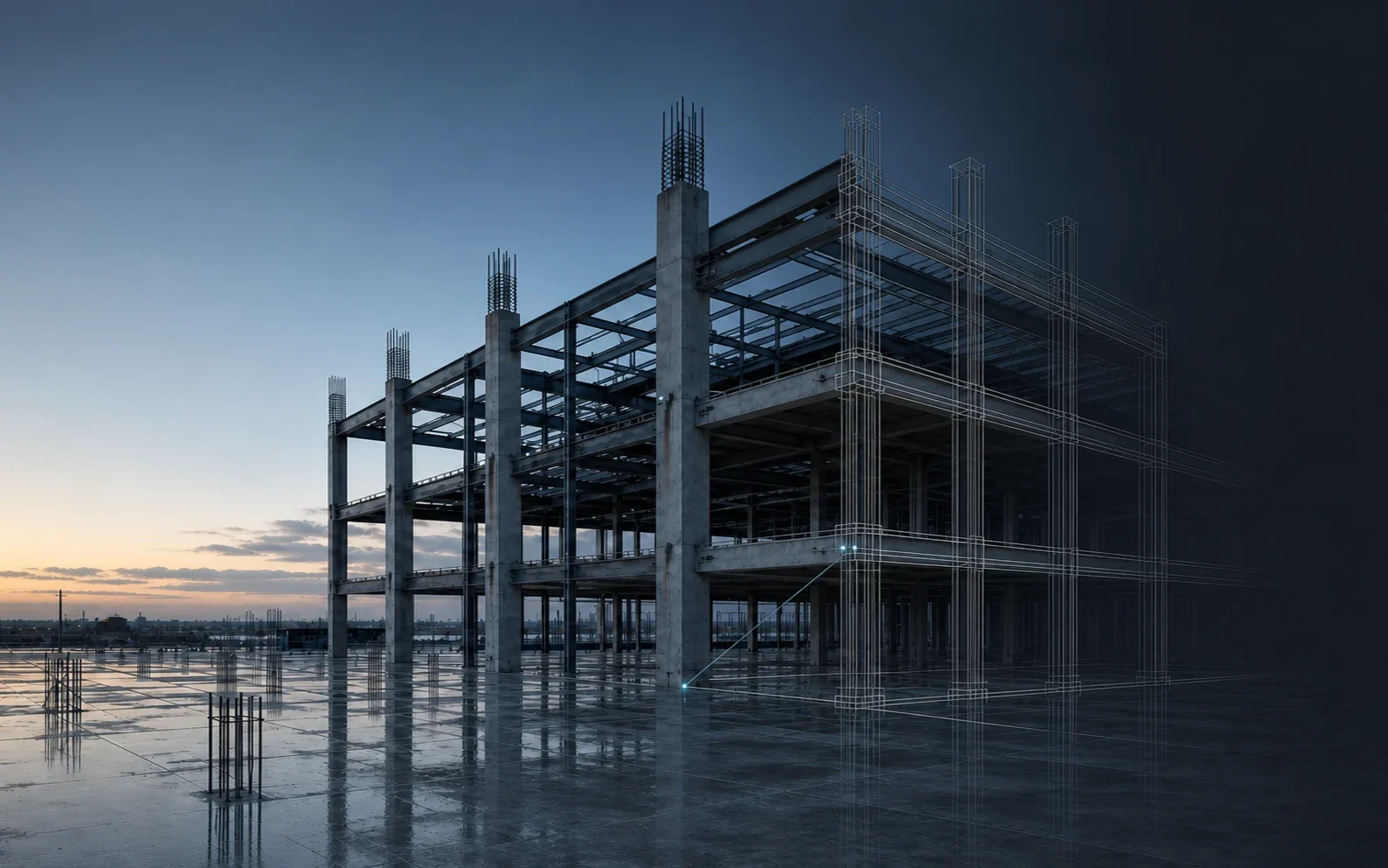
Turns building models into construction work packages, schedules and on-site task lists.
Crews work from the building model instead of from spreadsheets and memory.
- Stage reached
- Desktop product
- Period
- 2025 – present
- Sector
- Construction technology
- Organisation
- AROBOTIX
My contribution
I own the desktop application and the BIM processing under it, through to the mobile workflow a crew opens on site.
- BIM model processing and work-package review
- Construction planning and mobile task lists
- Offline field evidence and versioned plan releases
The result
A local-first desktop application connected to a mobile field workflow.
Engagement
Product engineering and systems integration
The problem
A building model already holds the engineering detail a site needs. Getting it onto a crew's phone is the hard part: someone has to interpret the model, review what it produced, release it, and then prove what was actually built. Most teams do that in spreadsheets, email and memory, and the record falls apart the moment anyone disputes it.
How it was approached
- Keep model processing and review on the engineer's own machine, so large IFC files never need a round trip.
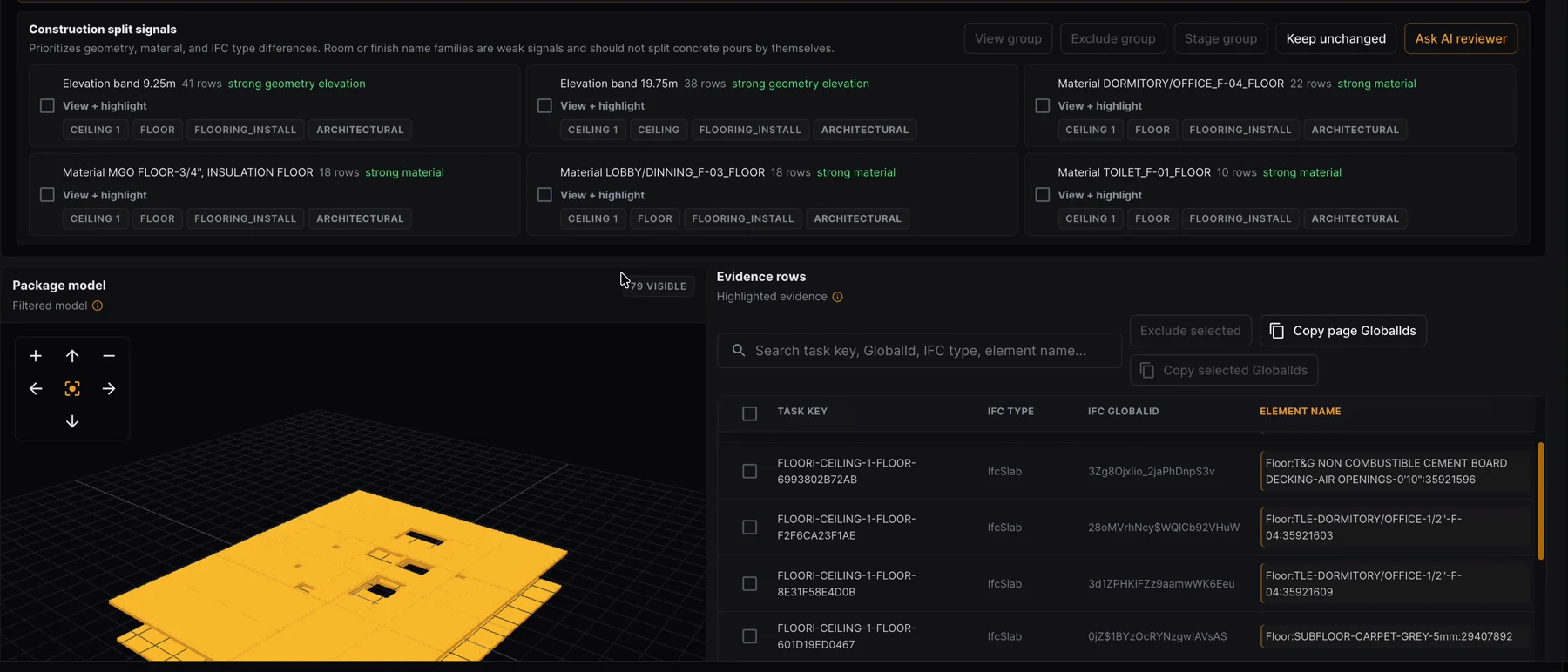
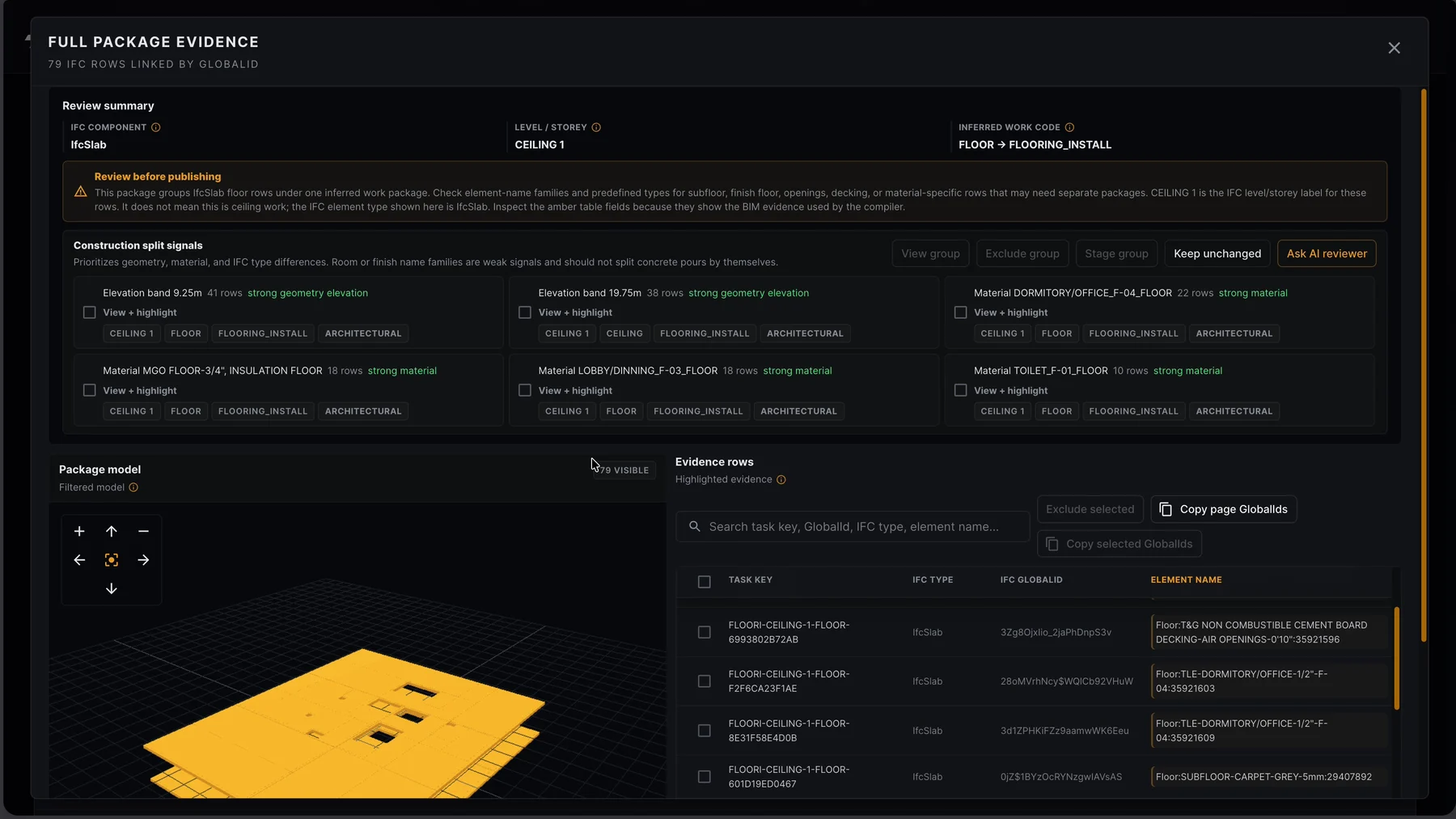
- Carry the source evidence from IFC intake all the way into work-package review, so every task traces back to the element it came from.
- Publish only approved, versioned plans, across a single narrow cloud boundary.
- Design the field client for gloves, glare and patchy signal rather than for a desk.
How far up the stack the work reached
The building model, the site and the crews already existed. Everything between them was built here: parsing, review, release and field evidence.
Site
The building, the crews and the work already scheduled against them.
Model
IFC building models supplied by the design and engineering teams.
Parsing
Python and IfcOpenShell extraction into a local, inspectable run store.
Review
Work-package compilation with model evidence attached to each row.
Release
Versioned execution plans published through an authenticated gateway.
Field
Offline-capable PWA holding tasks, state and photo evidence.
Engineering load
Mechanical
Electrical
Embedded
Software
Operations
What was built
Desktop runtime
One application the user launches, supervising every service behind it.
- Electron shell that starts and health-checks the web app and the Python parser
- Ephemeral loopback ports and a per-launch service credential
- Local workspace for IFC source, extracted rows, viewer artefacts and review state
- Packaged release lanes for macOS and Windows
Model-to-work pipeline
Model evidence becomes an execution plan someone can sign off.
- FastAPI and IfcOpenShell parsing with a durable local run store
- Work-package compilation, review queues and blocker triage
- Versioned execution-plan releases with an explicit approval step
- Extracted fact, machine inference and human decision kept visibly separate
Field coordination
Released work reaches the crew and comes back as proof.
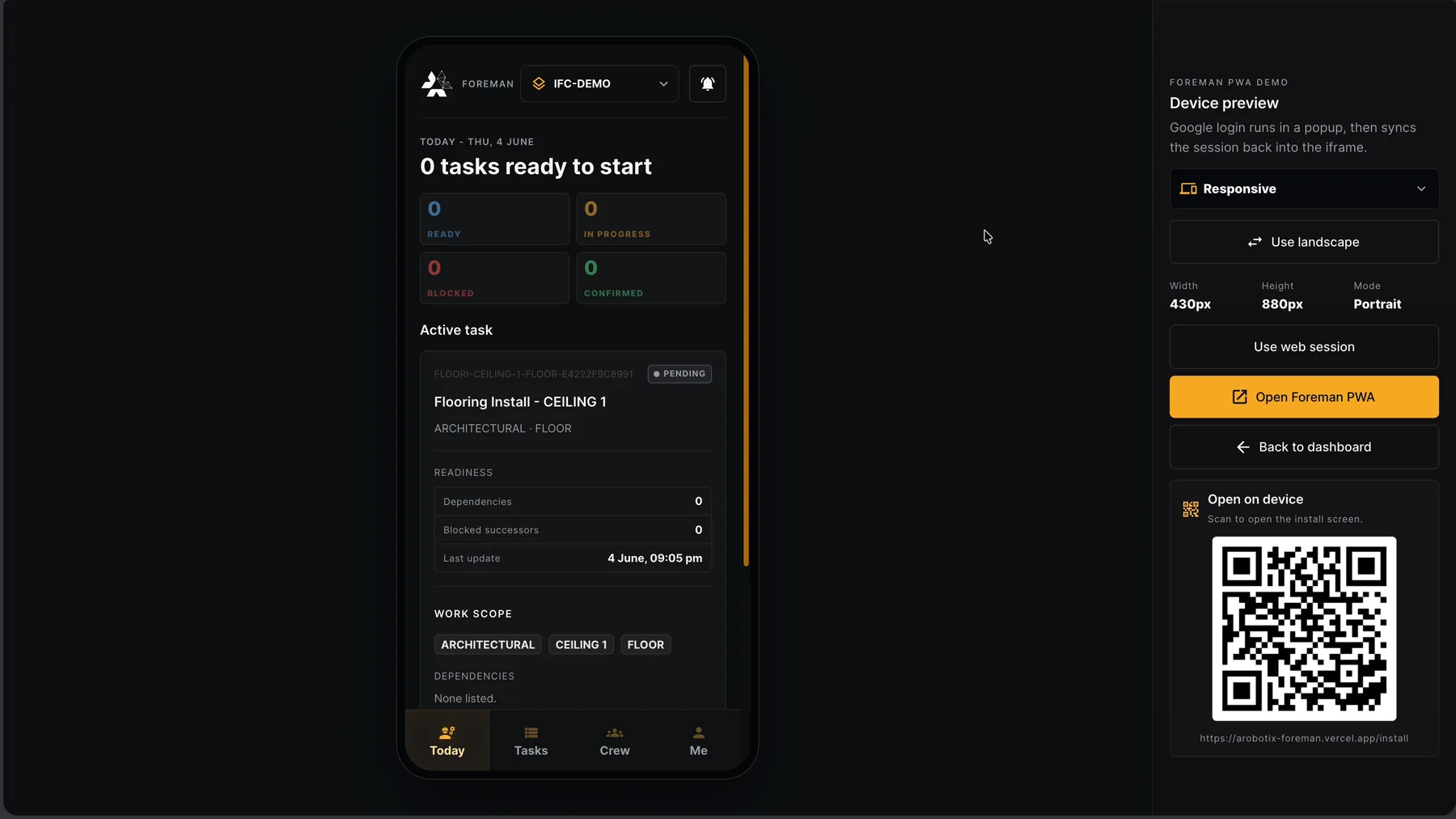
- Installable field PWA built for one-handed site use
- Offline task and evidence storage with deferred synchronisation
- Photo, GPS and model-linked completion records
- Authenticated cloud gateway as the only publish and sync path
What changed
Local-first
Nothing leaves without approval
IFC source, extracted rows, review state and viewer artefacts stay in the desktop workspace. Only an approved, versioned release crosses the cloud boundary.
Model → field
One unbroken chain
A task on a phone traces back through its release, its review and its work package to the model element it came from.
4 runtimes
Shipped as one product
Electron shell, Next.js console, Python parser and field PWA are supervised and released together rather than run as four separate stacks.
WCAG 2.2 AA
Built for site conditions
Contrast, focus, keyboard paths, reduced motion and 44px targets are design requirements, not a later audit.
Technical stack
Electron
Next.js
TypeScript
Python
FastAPI
IfcOpenShell
Supabase
PostgreSQL
Capabilities applied
Product architecture
BIM processing
Desktop software
Offline field workflows
From the project
Next project
RemixCode
Buyers can see what is inside a piece of software and reach the people who can change it.