Embedded product development
Industrial Shield
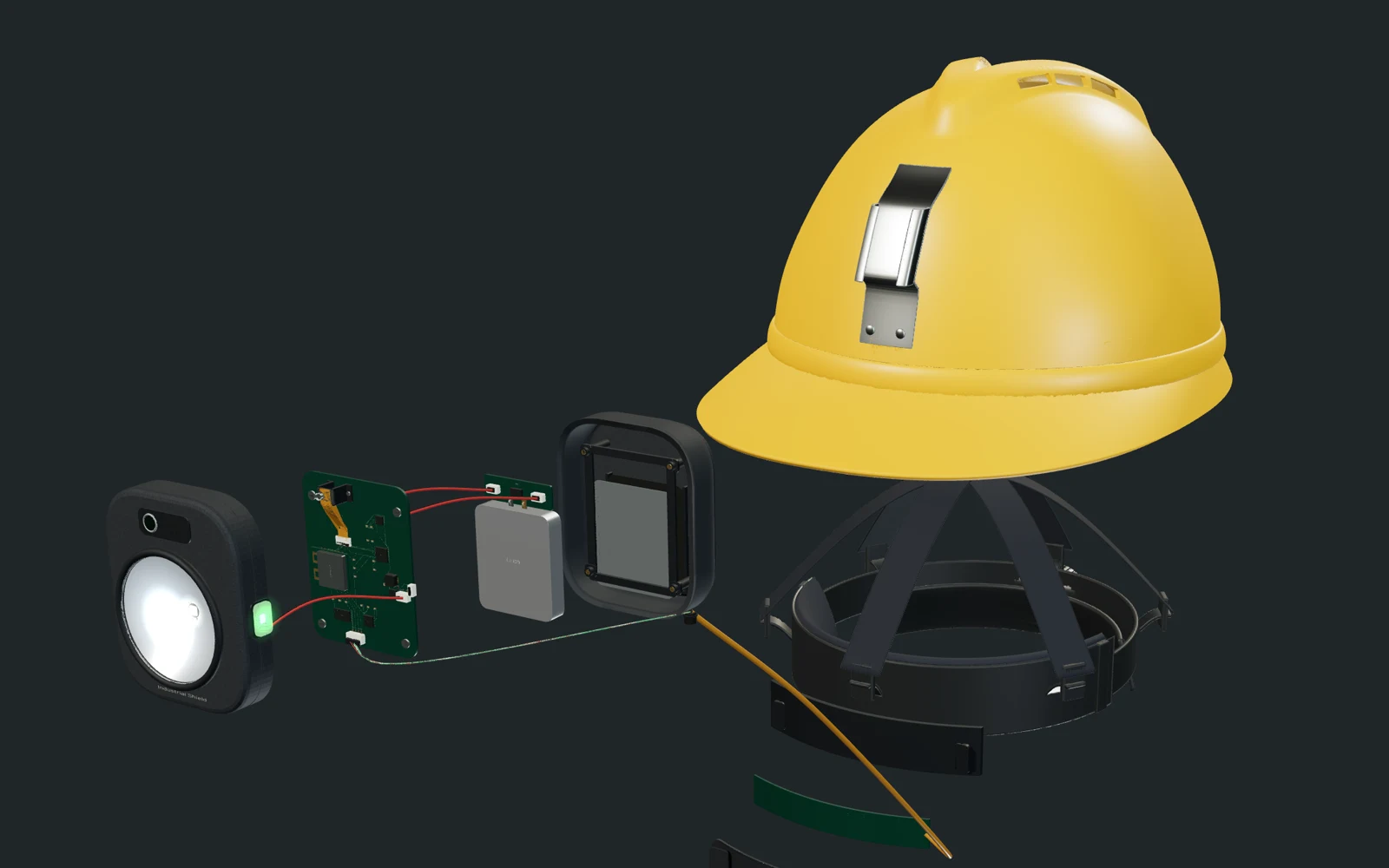
A helmet-mounted sensor device being developed to monitor conditions on construction sites.
A four-layer board, enclosure and firmware carried to a working helmet prototype.
- Stage reached
- Prototype hardware
- Period
- 2025 – present
- Sector
- Industrial IoT
- Organisation
- Industrial Shield
My contribution
The sequencing was the hard part. I set the bring-up order so packaging, power and antenna were settled before a board was spun, then did the electronics, firmware and enclosure.
- Sensor and power-system architecture
- Prototype electronics and bench firmware
- Mechanical integration and staged bring-up checks
The result
Electronics, firmware and enclosure work carried to the helmet proof of concept.
Engagement
Embedded product engineering and R&D
The problem
A connected sensing device has to reconcile packaging, power, antenna placement, communications and firmware before anyone can tell whether the complete assembly works. Get the order wrong and you spin boards for months. It also has to survive a construction site, which rules out most of what works on a bench.
How it was approached
- Resolve the power and interface architecture before committing to detailed integration.
- Separate individual sensor bring-up from whole-device testing, so failures stay attributable.
- Define a measurable check for every prototype stage rather than a general 'does it work'.
- Keep deferred capability behind an isolated build profile so it can be excluded cleanly.
How far up the stack the work reached
This is an original product. Everything from component selection up to the device backend was designed here, with commercial parts integrated where they earned their place.
Wearer
The helmet and the person wearing it on site.
Sensing
Evaluated sensor interfaces selected against real site constraints.
Hardware
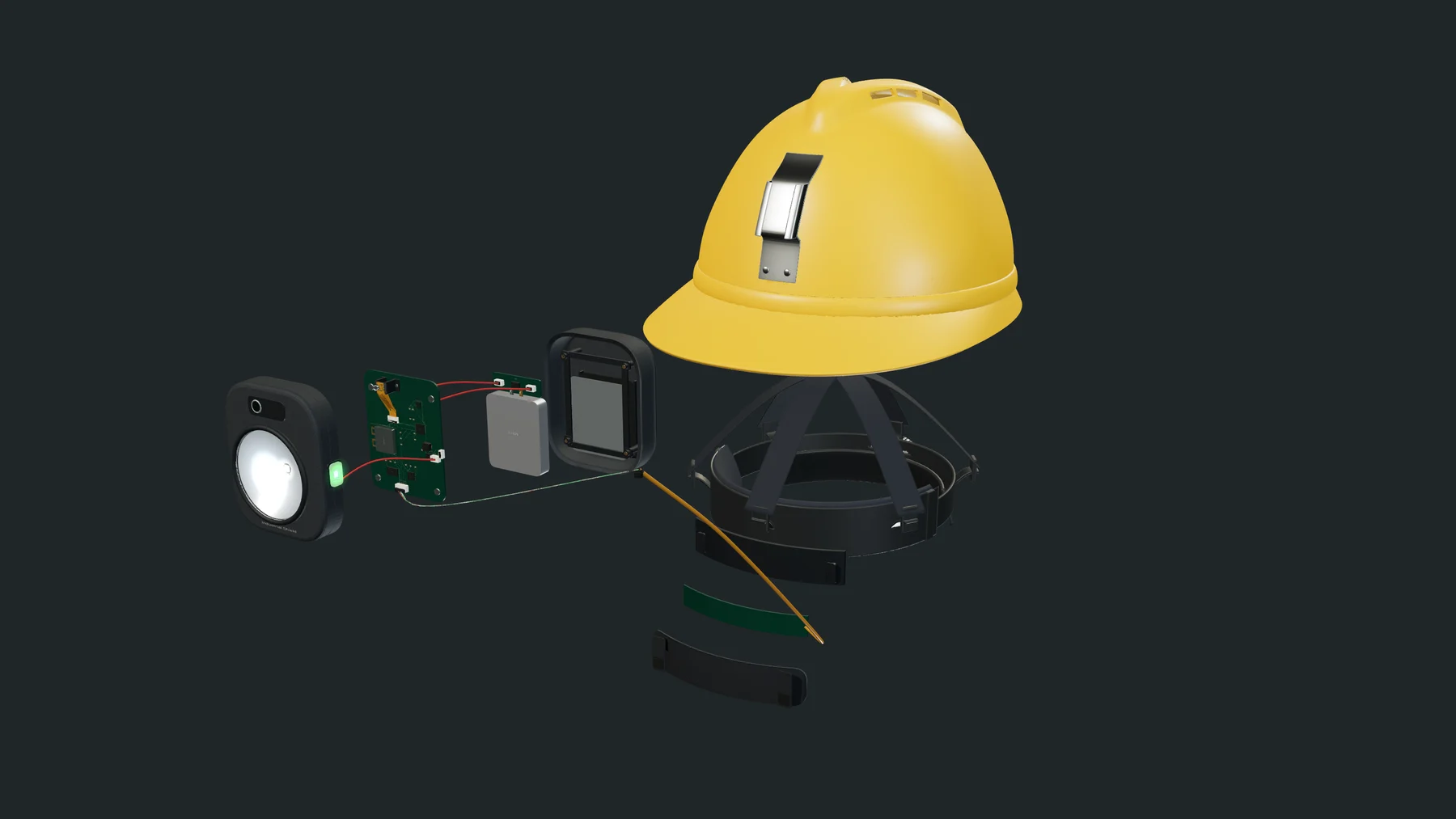
Four-layer PCB, power architecture, antenna and USB loom routing.
Mechanical
FreeCAD enclosure, mounting and clearance studies.
Firmware
ESP32 bring-up firmware, device state and diagnostics.
Backend
Device communications and server infrastructure.
Engineering load
Mechanical
Electrical
Embedded
Software
Operations
What was built
Electronics
Define the device around practical power and interface constraints.
- Component and sensor evaluation against site conditions
- Four-layer PCB with both inner layers held as ground planes
- Power architecture, PD programming and battery model selection
- USB loom routing, clearance audits and fabrication exports
Firmware and bring-up
Exercise each interface before trusting the whole assembly.
- ESP32 evaluation-board and custom-board firmware
- Sensor interface development and device-state handling
- Diagnostic tooling for bench and board bring-up
- A bring-up and calibration plan with explicit commissioning requirements
Mechanical integration
Turn open engineering questions into staged, checkable work.
- FreeCAD enclosure and helmet-attachment studies
- Mounting clearance corrections carried through to the PCB
- Bring-up fixtures and a defined test sequence
- Supplier tolerance and first-article qualification planning
What changed
Zero open nets
Across 2,108 track segments
The current main board routes 420 vias and 2,108 track segments across four copper layers with no open nets or missing connections.
Clean audit
Clearance and courtyards
A strict layout audit closed out with zero off-centre via entries and zero missing courtyards, with the mounting correction moving hardware and enclosure support together.
Staged bring-up
Validation plan
The test plan separates power, interfaces, sensors and complete-device checks, so a failure points at one layer.
Technical stack
ESP32
Embedded C/C++
KiCad
FreeCAD
Sensor interfaces
Device communications
Capabilities applied
Electronics design
Embedded software
Mechanical integration
Prototype planning
From the project
Next project
Motikon
Leaders see which part of the organisation is under stress, and for how long.